
Write Proposals With the Right Voice
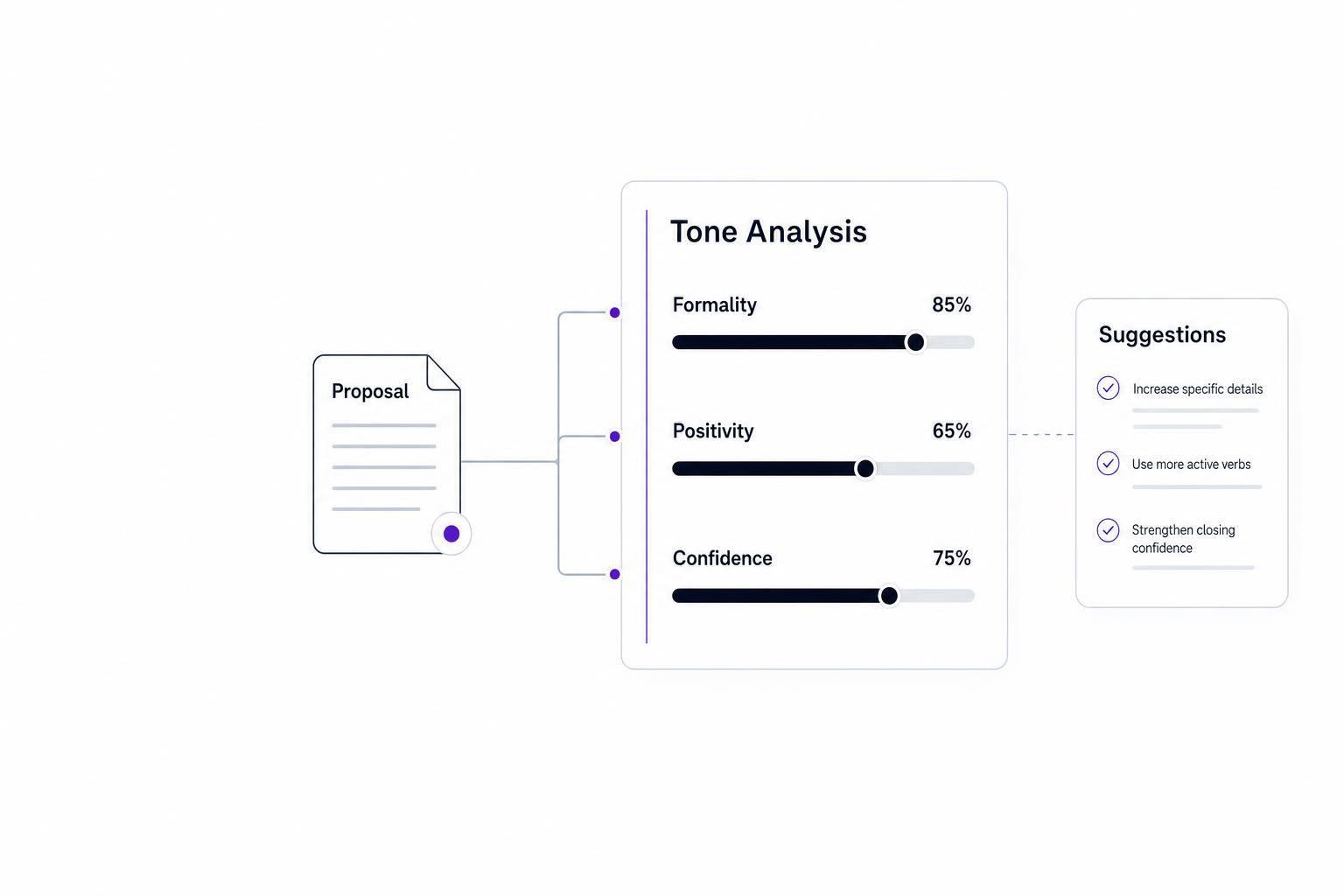
A well-written bid does more than list capabilities. It creates confidence, shows professionalism, and helps evaluators feel that your team is reliable from the first page. A Proposal Tone Analyzer helps you assess whether your wording supports that impression or quietly weakens it. By reviewing formality, positivity, and confidence, the tool gives you a clearer picture of how your proposal may sound to a decision-maker.
Why Tone Matters in Bid Writing
Many strong proposals lose impact because the language feels uncertain, too casual, or overly flat. Small phrases such as hesitant qualifiers, passive wording, or inconsistent style can change how your message is received. A proposal tone checker highlights these patterns and points to specific examples, making it easier to tighten your writing without starting from scratch.
Sharper Language, Better Presentation
This Proposal Tone Analyzer is especially useful for teams responding to RFPs, grants, and business bids where tone can influence credibility. Instead of vague feedback, you get practical suggestions that align with professional proposal standards. That means stronger phrasing, cleaner positioning, and a submission that sounds more deliberate, capable, and ready for review.
FAQs
What does the Proposal Tone Analyzer actually measure?
The tool reviews your proposal for three core tone dimensions that matter in professional bid writing: formality, positivity, and confidence. It looks at signals such as word choice, hedging language, directness, sentence construction, and overall phrasing. The goal isn’t to judge your writing in a generic way—it’s to show how your proposal may come across to evaluators and where small wording changes can make your message sound more credible and polished.
Can this help improve my chances of winning a bid?
It can certainly help strengthen the presentation of your proposal, which is often a key part of how evaluators perceive competence and reliability. While no tool can guarantee a win, clearer and more confident language can make your offer easier to trust and easier to compare favorably against competitors. If your proposal sounds too vague, overly casual, or hesitant, this tool helps you catch those issues before submission.
Is the feedback tailored for professional proposals rather than general writing?
Yes. The analysis is designed around business and procurement-style writing, not casual emails or academic essays. That means the suggestions aim to improve professionalism, clarity, and persuasive tone in a proposal context. For example, it may recommend replacing tentative phrases like ‘we hope to’ with stronger alternatives like ‘we will’ when the context supports a more assertive statement.